


Green shoots on former swidden land
Established in 1962, Cuc Phuong National Park, the "eldest brother" of Vietnam's special-use forest system, nurtures more than 2,200 plant species along with countless rare animal species. Yet, behind that vast and majestic appearance lie historical "scars." Before 1988, when local communities still lived in the core zone, many forest areas were depleted through logging for swidden agriculture. Even though local residents have been relocated to the buffer zone, nature's self-recovery process here continues very slowly.

Indigenous people have returned to the former swidden land to join hands in greening Cuc Phuong. Photo: Xuan Hao.
Understanding this reality, the Gaia Nature Conservation Center has coordinated with the Cuc Phuong National Park Management Board to implement the program "Joining Hands in Reforestation and Nature Experience." Right in Area 18, a former farm area in urgent need of improvement, more than 60 business representatives and volunteers planted thousands of native timber trees such as Cinnamomum, Cho, green Gioi, and Kim giao.

Every young tree planted today carries green hope and green aspiration. Photo: Xuan Hao.
The native trees planted and restored today will contribute to creating a natural seed source for the next 30 to 50 years. Looking further ahead, as the trees grow and forest biomass gradually increases, the capacity of the forest ecosystem to absorb and store carbon will be enhanced.
Carbon policy framework and the pressure of corporate green transition
In the goal of reducing greenhouse gas emissions, forests play a special role due to their ability to absorb and store carbon. Therefore, restoring degraded forest areas not only holds the significance of ecosystem regeneration and biodiversity conservation but also contributes to maintaining and increasing carbon sinks.

Directly participating in planting each Cho and Gioi tree is a way for organizations and businesses to "return" resources to nature. Photo: Xuan Hao.
According to a representative of the Cuc Phuong Endangered Primate Rescue Center and Conservation, the park currently has 16,000 hectares under strict protection and 4,000 hectares in the ecological restoration zone. In the context of limited state budget resources, mobilizing socialization to regenerate large timber trees is the key solution.
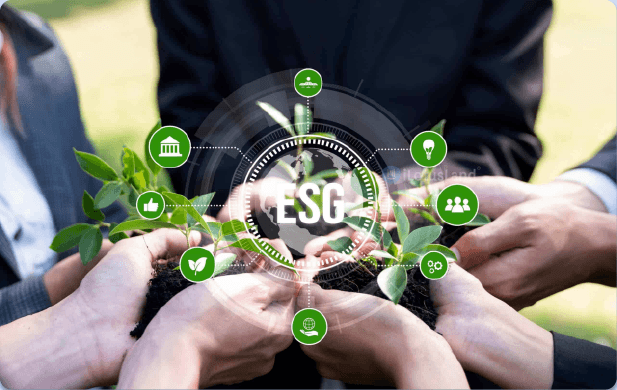
Nam Dinh Wood Processing Company and An Cuong Wood Joint Stock Company have accompanied Gaia in seeding more than 7,000 trees over 4 years. Instead of stopping at tree-planting activities, the program is linked with care and monitoring processes so that the planted trees have the conditions to develop into part of the forest ecosystem. This activity demonstrates corporate social responsibility while moving towards meeting ESG (Environmental - Social - Governance) practice standards and creating competitive advantages when strict carbon barriers from international markets are officially enforced.
At Cuc Phuong, supplementing native timber tree species in former swidden areas is a long-term process. Effectiveness does not lie in the number of trees planted at a single time, but depends on the survival rate, growth process, biomass formation capacity, and recovery of the forest ecosystem structure.
The Cho, Gioi, Cinnamomum, or Kim giao trees planted in Area 18 will take many years to become part of the Cuc Phuong great forest. But that very recovery process gradually regenerates biomass, reconnects the ecosystem, and increases the forest's capacity to absorb and store carbon. From the "gaps" of the old swidden land, a natural carbon sink is gradually being restored.