


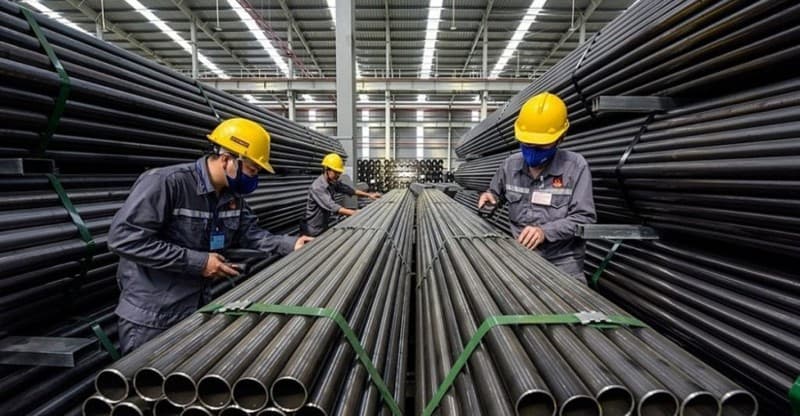
Among Vietnam’s exports affected by the European Union’s Carbon Border Adjustment Mechanism (CBAM), steel accounts for an overwhelming share of export value. Some statistics indicate that around 96% of the value of Vietnam’s CBAM-covered goods comes from the steel sector, highlighting the significant pressure facing the industry as the EU increasingly links trade with carbon emissions reduction requirements.
Steel Accounts for the Majority of Vietnam’s CBAM Goods Value
The EU is one of the key export markets for Vietnam’s steel industry. According to figures cited by the Vietnam Steel Association, Vietnam exported nearly 3.2 million tonnes of steel to the EU in 2023, with a total value of almost USD 2.5 billion, nearly double the level recorded in 2022. In the first four months of 2024, steel exports to the market reached approximately 1.47 million tonnes, worth more than USD 1 billion.
This large export volume has placed the steel industry at the center of attention as the EU implements CBAM. The mechanism is not only concerned with the volume of exported goods, but also requires the calculation of carbon emissions embedded in products during the production process.
This means that steel companies seeking to maintain access to the EU market must not only meet quality and rules-of-origin requirements, but also be capable of monitoring, calculating, and providing reliable emissions data.
CBAM Officially Entered Its Definitive Phase in 2026
CBAM entered its definitive phase on 1 January 2026, following a transitional period that ran from October 2023 through the end of 2025. The mechanism currently applies to six categories of goods: cement, iron and steel, aluminium, fertilisers, electricity, and hydrogen.
In essence, CBAM is designed to incorporate the cost of carbon into goods imported into the EU, thereby reducing the risk of companies relocating production to countries with less stringent emissions standards. For importers covered by CBAM, the embedded emissions associated with imported goods must be declared and linked to obligations to purchase and surrender CBAM certificates in accordance with applicable regulations.
During the first days of CBAM’s definitive implementation, iron and steel accounted for 98% of the total volume of CBAM goods declared between 1 and 6 January 2026. The European Commission noted that these were preliminary figures from the early stage of implementation, but they also demonstrate the prominent role of iron and steel products within the CBAM framework.
The Pressure Goes Beyond Carbon Costs
For Vietnamese enterprises, one of the most important requirements is to establish a verifiable emissions data system.
During the definitive phase, emissions calculation requirements differ across product groups. For iron and steel, aluminium, and hydrogen, the current CBAM scope focuses on direct emissions, while cement and fertilisers are required to report both direct and indirect emissions under the applicable rules.
In August 2026, the European Commission also released additional sector-specific guidance documents, including dedicated guidance for the iron and steel industry, to support businesses in establishing systems for monitoring and calculating emissions associated with goods exported to the EU.
For the steel industry, this could become a new dimension of competitiveness. Companies will need to look beyond production volumes and costs and understand how much carbon is emitted per tonne of product-and, equally importantly, what data can be used to substantiate those figures.
Steel Is the Main Focus, but It Is Not the Only Sector Affected
Although steel has accounted for a very large share of the value of Vietnam’s CBAM-covered goods in previous statistics, the 96% figure should not be considered a fixed proportion for every year. Export values and the composition of exports may change over time.
Other product groups, including cement, aluminium, and fertilisers, also fall within the scope of CBAM and must comply with the corresponding requirements when exported to the EU.
For Vietnam, CBAM is therefore not merely a new requirement for the steel industry. It also signals that emissions data, greenhouse gas inventories, and emissions reduction capacity are becoming increasingly important components of international trade.
As CBAM is now fully operational, proactively measuring emissions and improving energy efficiency will help businesses strengthen their preparedness for carbon-related requirements that are becoming increasingly integrated into global trade.