

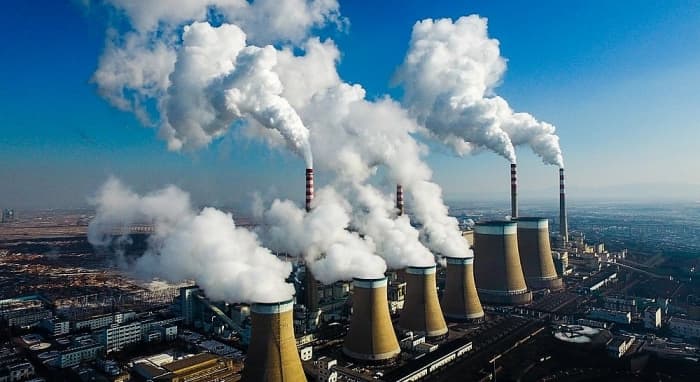
The image of billowing smokestacks once stood as a proud symbol of industrial development and economic growth throughout the 20th century. Yet, entering this decade, those dark plumes of smoke have become a measure of waste, a cost burden, and a warning sign of the risk of being excluded from the global supply chain.
Strict technical barriers such as the European Union's (EU) Carbon Border Adjustment Mechanism (CBAM), tighter emission taxes, and the Environmental, Social, and Governance (ESG) standards framework are driving the traditional fossil fuel-dependent manufacturing model into a corner. "Smoke-free manufacturing" is not merely an environmental protection slogan, but a comprehensive restructuring of technology, operational mindset, and business models, while serving as the ticket for businesses to survive and break through.
1. Why Has "Smoke-Free" Manufacturing Become a Survival Imperative?
The Legal Wall and New Export Standards
The wave of emission regulations from major import markets is exerting unprecedented pressure on exporting businesses. Effective January 1, 2026, the European Commission (EC) officially brings the Carbon Border Adjustment Mechanism (CBAM) into its full financial obligation implementation phase. Imports of items such as iron, steel, aluminum, cement, fertilizers, electricity, and hydrogen are required to purchase CBAM carbon certificates corresponding to the embedded emissions in the products.
According to an impact assessment report from the Energy Transition Partnership (ETP), CBAM could reduce Vietnam's goods export revenue by approximately 100 million USD if businesses fail to adapt in time. Among them, the most heavily impacted sectors such as steel and aluminum could face cost increases equivalent to 15% to 40% of product prices. CBAM compliance costs currently traded on the EU ETS market range from 75 to 82 EUR per ton of CO2 equivalent, creating a direct financial burden on every shipment to Europe.
Simultaneously, the Corporate Sustainability Reporting Directive (CSRD) along with strict ESG standards compels companies to transparently disclose their environmental impact. International customers in the EU, the US, and Japan are not only reviewing on-site product criteria but are also expanding their obligation to control and measure carbon footprints across the entire supply chain. Businesses unable to prove the "greenness" of their production processes will face the risk of supply chain disruption right at the partner vetting stage.
Cost Pressures from Fossil Fuels and OPEX Volatility
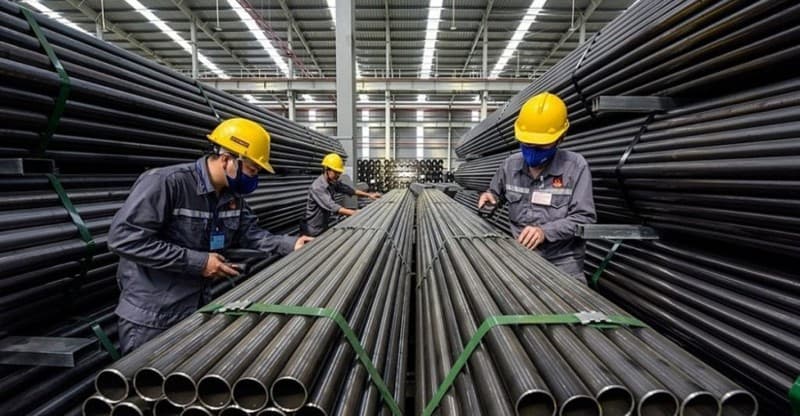
According to statistics from the Ministry of Industry and Trade, energy costs in heavy industrial manufacturing sectors in Vietnam account for a very high proportion of total operating expenses (OPEX): from 15% to 20% for textiles and chemicals; 25% to 30% for steel manufacturing; and up to 35% to 45% in the cement and ceramics sectors. Heavy reliance on coal, FO oil, and gas makes profit margins extremely sensitive to geopolitical fluctuations and global energy crises.
Additionally, the trend of periodic industrial electricity price increases alongside the emergence of administrative fines for environmental pollution is driving up waste disposal costs. Shifting toward renewable energy, such as self-consumed rooftop solar power, and improving energy efficiency is no longer purely an image-building exercise, but a direct solution helping businesses lock in long-term energy costs and protect profit margins against the upward trend of fossil fuels.
Changes in Consumer Mindset and Investment Capital Flows
Green consumer awareness is shifting from pioneering customer segments to a mainstream global trend. The annual consumer survey report Voice of the Consumer by PwC indicates that up to 80% of consumers are willing to pay extra costs (on average 9.7% higher) for products produced sustainably, with transparent origins and minimized carbon emissions.
In the capital markets, global investment flows are reshaping capital boundaries. According to data from Bloomberg Intelligence, total assets under management (AUM) of investment funds applying ESG standards have surpassed the 40 trillion USD mark. International financial institutions such as the ADB, IFC, and many major commercial banks are tightening credit limits for fossil fuel-intensive projects, while expanding "Green Credit" packages with preferential interest rates 1% to 2.5% per year lower for factories holding carbon-neutral certifications or clear emission reduction records.
2. Deciphering the Terminology: What Defines a Factory That No Longer "Emits Smoke"?
Automation Combined with Decarbonization
The concept of a "smoke-free factory" does not merely stop at eliminating black smoke or soot visible to the naked eye from traditional smokestacks. The essence of this model is the decarbonization process also known as Decarbonization. This process maximally cuts down and moves toward eliminating all greenhouse gases (CO2, CH4, N2O) generated throughout the operational chain.
According to international greenhouse gas management standards, all factory emission activities are clearly categorized into 3 scopes:
- Scope 1 (Direct Emissions) Emissions generated from sources directly owned or controlled by the factory, such as burning coal/oil in boilers, kilns, operating diesel generators, or refrigerant gas leakage systems.
- Scope 2 (Indirect Emissions from Energy): Emissions generated during the production of grid electricity, steam, or cooling systems purchased by the factory for manufacturing.
- Scope 3 (Value Chain Indirect Emissions): Embedded carbon residing across the entire extended supply chain, ranging from raw material extraction, packaging, and logistics transportation to waste treatment stages after products reach the end of their life cycle.
Value Chain Restructuring: From Linear Economy to Circular Economy
The fundamental difference between a traditional smoking factory and a green factory lies in the mindset of resource handling. Traditional factories operate on a Linear Economy model based on a short packaging cycle: "Extract - Produce - Dispose". In this model, raw materials and energy are fed into the assembly line, mostly transforming into products, while the remainder along with waste heat, exhaust gases, and byproducts are pushed directly into the environment as waste, generating a double loss: input material purchase costs and waste treatment/discharge tax costs.
Conversely, the "smoke-free" factory thoroughly transitions to the Circular Economy based on a multi-tier design framework: Reduce is minimization Reuse is reuse Recycle is recycling Recover is energy recovery. This transition is implemented through 3 closed-loop cycles:
- Input loop: Maximally substituting fossil fuels and raw materials with biofuels, recycled materials such as rPET or recycled metals, and 100% renewable electricity.
- Internal loop & industrial symbiosis: Establishing energy and material flow exchange systems right within the process. Hot gas exhausted from kilns is not pushed up smokestacks but routed through a heat recovery system to generate electricity or dry raw materials. Industrial wastewater is treated via a ZLD system to 100% recirculate back into production. Notably, byproducts from this factory such as slag or gypsum become input materials for the adjacent building materials manufacturing factory.
- Output loop: Products are designed according to "Eco-design" criteria, allowing easy disassembly, recycling, or biodegradation after expiration, completely eliminating landfilling or incineration that releases toxic gases.
3. Four Technological Pillars Creating the Green Revolution Beneath Factory Roofs
Energy Transition: Rooftop Solar and Storage Batteries
Replacing fossil grid electricity with renewable energy is the most fundamental solution to eliminate Scope 2 indirect emissions:
- Factory Rooftop Solar Power: Utilizing expansive factory rooftop space to install solar panel systems serving production directly under the self-consumption model.
- BESS energy storage battery system: Ensuring continuous operating power sources, storing excess electricity during off-peak hours to discharge during peak hours, reducing grid dependence, and optimizing electricity costs.
- Renewable Energy Certificates (I-REC): Utilizing clean energy certifications to legitimize carbon inventory data according to international standards.
Digital Transformation Combined with Green Transformation
Green transformation cannot stand separate from digital transformation. The "Twin Transition" trend applies data technology to optimize resource usage:
- EMS Energy Management System: Monitoring electricity, water, and compressed air consumption in real time across each production stage through an IoT sensor network.
- AI Predict & Predictive Maintenance: Artificial intelligence algorithms analyze operational data, accurately forecasting when equipment requires maintenance, completely eliminating idling machinery that wastes energy.
Waste Heat Optimization and Resource Regeneration in Production
- Waste Heat Recovery Technology WHR: Collecting hot air streams and exhaust heat from kilns and combustion engines to convert into electricity or supply heat back to the production line, helping save 15% to 30% of input fuel.
- ZLD Zero Liquid Discharge Wastewater Treatment System: Applying modern membrane filtration and concentration technologies to reuse 100% of industrial wastewater within the internal loop.
Green Materials and Low-Carbon Production Technology
- Combustion Fuel Replacement: Converting boilers using coal and FO oil to biofuels from agricultural and forestry byproducts or researching the application of green Hydrogen for high-temperature processes.
- Bio-based and Recycled Materials: Introducing recycled materials such as rPET plastics or bio-based materials into the production process to reduce the embedded carbon index per unit of product.
4. Practical Lessons from Successful "Smoke-Free Factory" Models
International Lessons from Gigafactory and Carbon-Neutral Models
Practical implementation by multinational industrial corporations proves that transitioning to a "smoke-free factory" model does not stop at formalistic commitments, but is entirely feasible technically and economically sustainable in the long term. A prime example is the LEGO Group's factory project at VSIP III Industrial Park in Binh Duong with total investment exceeding 1.3 billion USD. As the group's first carbon-neutral production facility globally, the project is designed as a smart Gigafactory model featuring a rooftop solar farm with over 12,400 panels, a capacity of 7.34 MWp, combined with a BESS energy storage battery system and a direct power purchase mechanism. Thanks to optimized architecture achieving both LEED Gold and LEED Platinum green building certifications, this model helps reduce approximately 15,000 tons of CO2 emissions annually, setting a new standard for mega-manufacturing plants in the Asia-Pacific region.
In terms of supply chain operations, Schneider Electric has actualized its decarbonization strategy through "The Zero Carbon Project" combined with comprehensive digital infrastructure. By integrating smart energy management solutions and real-time emission data tracking across the entire assembly line, Schneider Electric has cut its Scope 1 emission intensity down to 2.13 tons of CO2e per million USD of revenue. This is an outstandingly low metric compared to the industry average of 5.97 tons of CO2e per million USD among peer enterprises.
These practical proofs affirm that the combination of automation, digital transformation, and renewable energy is the core formula helping large-scale factories both eliminate emission streams and optimize long-term operating costs.
Current Status and Bright Spots in Vietnam
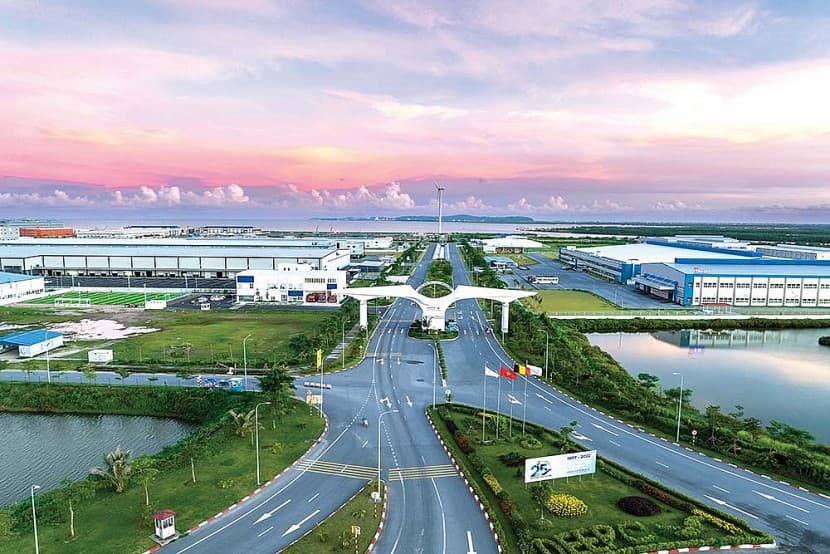
In Vietnam, the green transition wave is recording concrete progress through the eco-industrial park development program implemented by the Ministry of Planning and Investment in collaboration with the United Nations Industrial Development Organization (UNIDO). Practical applications in pilot industrial parks such as Deep C in Hai Phong, Amata in Dong Nai, and Hoa Khanh in Da Nang have proven clear effectiveness in both environmental protection and financial performance. Through the adoption of cleaner production solutions, the optimization of water and electricity consumption efficiency, and the establishment of industrial symbiosis networks—where the waste and by-products of one factory become raw material inputs for another—participating units have cut more than 32,000 tons of CO2 emissions annually. At the same time, this model helps save tens of millions of kWh of electricity and reduces thousands of tons of consumed chemicals, bringing direct economic benefits worth millions of USD to the business community.
5. Major challenges for enterprises
Although the long-term benefits of green factories are undeniable, the transition process in reality still encounters its biggest barrier from initial capital investment (CAPEX). Replacing old machinery lines with high-efficiency equipment, installing waste heat recovery systems, building solar power infrastructure combined with Battery Energy Storage Systems (BESS), as well as paying for consulting services, greenhouse gas inventories, and international certification assessments require a very large budget in the short term. For small and medium-sized enterprises with limited financial capacity, this cost creates a significant cash flow burden and often makes management hesitant regarding green technology investment decisions.
However, analyzed from the perspective of long-term financial management, greening factories presents a completely feasible economic proposition through the reduction of operational expenditures (OPEX). Optimizing energy consumption and reusing resources helps factories cut 15% to 35% of their monthly electricity, water, and fuel bills. These regular operational savings allow businesses to fully recover their initial CAPEX investment within a period of 3 to 5 years. In addition, the emergence of green credit packages with preferential interest rates from commercial banks and international financial institutions is opening up effective capital mobilization channels, helping businesses proactively alleviate short-term financial pressure to accelerate their transition roadmap.
Alongside the capital issue, barriers regarding governance capacity and human resources are also major challenges for many manufacturing plants. The market is currently facing a severe shortage of technical personnel with deep expertise in emission measurement, carbon inventories according to ISO 14064 standards, and ESG governance. Furthermore, traditional operating habits and the reluctance to change among production floor technical staff often create internal resistance. This requires corporate leadership to have clear strategic thinking, high political determination, and a systematic staff retraining plan to ensure that the transition process takes place synchronously and effectively.
The revolution under the roofs of workshops is no longer a scenario of the distant future but is taking place directly on every production line. "Smoke-free production" has transcended the meaning of a purely social responsibility activity to become a mandatory survival index for every industrial enterprise.
Faced with the wave of carbon taxes and new export standards, proactively conducting emission inventories, upgrading technology, and optimizing energy starting today is the only way for businesses to protect their position, maintain orders, and develop sustainably in the global value chain.
References
- Doanh nghiệp Việt với bài toán chi phí năng lượng — CafeF
- Chuyển đổi từ kinh tế tuyến tính sang kinh tế tuần hoàn - góc nhìn thực tiễn — Báo Nhân Dân
- ESG AUM set to top $40 trillion by 2030, anchor capital markets — Bloomberg Intelligence
- Từ sản xuất sạch hơn đến cộng sinh công nghiệp: Hành trình tạo giá trị kép — Bộ Công Thương Việt Nam
- Cộng đồng doanh nghiệp tham gia tích cực vào trung hòa carbon — VnEconomy
- Cơ chế CBAM của EU và khuyến nghị giải pháp cho Việt Nam. Tạp chí Công Thương — Tạp chí Công Thương
- Consumers willing to pay 9.7% sustainability premium, even as cost-of-living and inflationary concerns weigh: PwC 2024 Voice of the Consumer Survey — PwC Global
- LEGO Group opens $1.3 billion neutral-carbon factory in Binh Duong — VietnamPlus