
Replacing fossil fuels with biomass, controlling electricity and water consumption, and utilizing by-products as new raw materials – changes in manufacturing operations are helping Vietnamese businesses gradually reduce resource waste, control emissions, and move closer to a circular economy model.
Green transition starts from inside the factory
In industrial manufacturing, energy, water, and raw materials are factors that directly affect operating costs as well as environmental impacts. As the demand for resources grows, improving efficiency not only helps businesses save costs but also creates conditions to reduce emissions in the long term.
In Quang Ngai, some businesses are choosing this approach: instead of focusing only on waste treatment after production, solutions are implemented right from the stages of energy use, raw material management, and equipment operation.
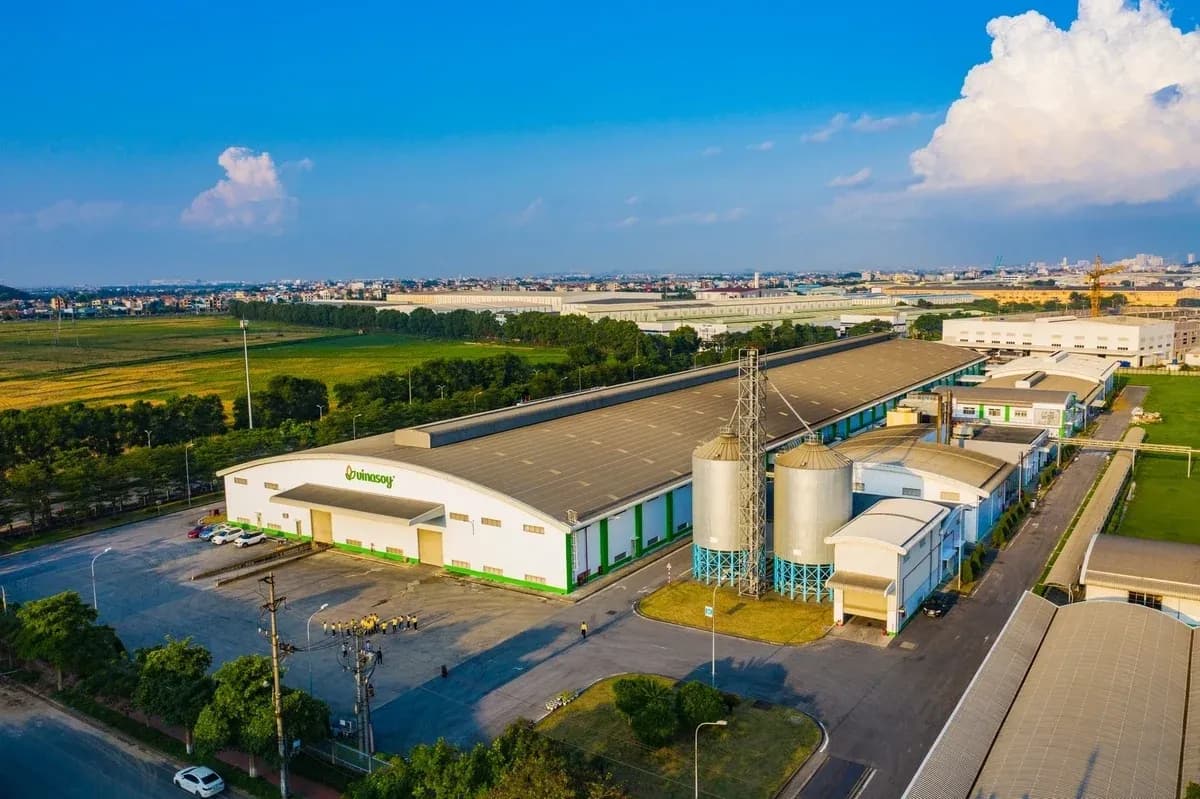
A typical example is the Vietnam Soy Milk Company (Vinasoy), which is combining the use of biomass fuel with measures to control electricity, water, and thermal energy consumption at its factory.
This practice shows that a green transition does not necessarily start with changing the entire production line. Sometimes, reviewing the resources used every day can also open up opportunities to significantly improve operational efficiency.
Biomass fuel: An alternative direction for fossil fuels
One of the solutions applied by Vinasoy is using steam for production generated from biomass fuel, replacing the steam source that uses fossil fuels.
Biomass is organic material of biological origin, which can include agricultural by-products, wood, and suitable organic raw materials. When used in heat generation systems, biomass can partially replace energy demand from coal, oil, or gas.
However, the actual emission reduction level still depends on the fuel source, combustion technology, equipment efficiency, transportation process, and biomass supply chain management.

Using biomass fuel is a direction to replace fossil fuels in industrial production.
Alongside fuel transition, Vinasoy also monitors electricity, water, and thermal energy consumption to limit resource loss during operation.
Monitoring these indicators helps businesses identify energy-intensive stages, detect anomalies, and develop appropriate efficiency improvement plans.
This is also an important foundation for collecting data to serve greenhouse gas inventories, build emission reduction targets, and evaluate green transition results over time.
Utilizing raw materials, reducing waste from the processing process
Not only focusing on energy, Vinasoy also applies whole-bean grinding technology in the production of its Fami Green Soy product line.
This method allows utilizing soybean raw materials without having to separate okara like some conventional processing procedures, contributing to reducing raw material waste and limiting generated wastewater.
For the soybean okara from other production stages, the company organizes collection and transfers it to partners to be used as animal feed or organic fertilizer.
Water is recovered and reused; scrap and packaging are sorted for recycling.
These activities demonstrate an important principle of the circular economy: finding ways to extend the utility value of resources, limiting raw materials from becoming waste immediately after a production cycle.
Instead of just asking how to treat generated waste, businesses can consider whether they can reduce generation from the start or bring by-products back into another usage chain.
Measuring emissions to build a carbon reduction roadmap
Along with production improvement solutions, all three Vinasoy factories have completed greenhouse gas inventories.
This is a necessary step for businesses to clearly understand emission sources in their operations, establish a basis for assessing energy efficiency, and select emission reduction measures.
According to information shared by the enterprise with the Agriculture and Environment Newspaper, in the coming period Vinasoy plans to continue studying the feasibility of rooftop solar power systems, upgrading energy-saving equipment, and finalizing greenhouse gas inventory data.
Combining inventories with technological improvements is of great significance, because emission reduction targets must be monitored with actual data rather than stopping at commitments.
For example, fuel consumption, electricity usage, production output, and corresponding emission factors are information that can serve to evaluate changes in emissions across different stages.
When data is collected consistently, businesses have an additional basis to identify stages that require prioritized investment while monitoring the results of implemented solutions.
When green technology goes hand in hand with economic efficiency
The trend of technological improvement is also being recorded in other manufacturing sectors in Quang Ngai.
At Hoa Tho Quang Ngai Garment Factory, investing in an automatic ironing system helps increase product processing capacity and reduce the need for direct labor in this stage.
According to published information, the enterprise invested nearly 2 billion VND in the automatic ironing system while applying rooftop solar power, helping to reduce electricity costs by about 30%.
The factory also switched from gas-fired boilers to electric boilers to eliminate gas usage in the corresponding stage.
These changes show that investing in technology, improving productivity, and reducing environmental impact can support one another.
However, the overall emission reduction effectiveness of each solution needs to be assessed based on energy sources used and operational data. For instance, electric boilers can eliminate direct emissions from gas combustion at the factory, but indirect emissions associated with consumed electricity must still be accounted for.

Illustration of tracking electricity, water, and thermal energy to improve resource use efficiency.
From resource conservation to circular production thinking
The activities of Vinasoy and Hoa Tho Quang Ngai Garment Factory suggest a shift in how businesses approach environmental issues: moving from a focus on waste treatment to emission prevention, efficient resource use, and production process improvement.
Nevertheless, the transition does not occur uniformly across all enterprises. Initial investment costs, the ability to choose technology, specialized human resources, and data management capacity remain significant challenges.
For small and medium-sized enterprises, a suitable roadmap can begin with measuring current resource use status, identifying the stages with the most waste, and then selecting improvement solutions corresponding to financial capacity and operational conditions.
From using biomass fuel, saving electricity and water to recovering by-products and conducting greenhouse gas inventories, each solution contributes to the broader picture of low-emission production.
Green transition is therefore not only a story of new technologies. It is also the process of changing how businesses use energy, raw materials, and data to create products with less wasted resources.
When these changes are maintained and their effectiveness measured, green production can become part of the strategy to enhance competitiveness, utilize resources sustainably, and move toward net-zero emissions targets.